Changing Demographics

About Changing Demographics

The good news is that we are living longer, healthier lives. Average life expectancy rose by some 30 years over the course of the 20th Century, and continues to increase.  According the the United Nations, the number of people over the age of 65 is expected to increase by 188% between 2010 and 2050.  Even more dramatically, the number of people living past 85 is expected to grow by 351%, and those reaching 100 is predicted to increase by 1004% over the same period.

Advances in medical technologies, and in particular the spectacular decline in the cost and time required to map the human genome holds the promise of further dramatic increases in life expectancy, and in particular, the prospect of staying healthier and more active in later life.

Business Challenges

While longer, healthier lives are an exciting prospect, this megatrend comes with several challenges for businesses.

First, the demographics of your employees are going to change dramatically, as is the employment relationship itself.  With the prospect of living into the 90s and 100s for today’s younger workers, the traditional life course of being in education until the early 20s, working until the mid 60s and spending the rest of life in retirement is not going to be viable, both from a financial standpoint and from a desirability perspective.  People are going to work longer, perhaps switching careers later in life.  Promotion ladders are potentially going to become clogged.  For those companies facing waves of upcoming retirements, filling those positions is going to be harder, and the employment relationship and expectations on both sides is likely to shift. Who the burden of healthcare falls on is going to become an even more critical challenge. The same is true for retirement preparation, particularly with increasing stresses on government provision of social security. People are moving towards thinking of their careers from a portfolio perspective, resulting in more movement and shorter tenures with organizations, increasing hiring and retention issues. Companies may need to rethink the employment relationship entirely to move towards a more “gig” based employment landscape. In short, the human resource challenges of your organization are going to escalate dramatically.

Second, the demographics of your customers are changing. As the population ages, with proportionally more older people and fewer younger people, demand patterns shift and opportunities arise in new markets.  But at the same time, some industries will suffer or need to undergo dramatic shifts to remain relevant.

Third, as people age and move into retirement or semi-retirement they begin to draw down on prior investments.  This may result in a large shift in available investment capital, and the stability of the shareholder base for many firms, providing challenges for investment capital.

Fourth, how the government and society as a whole deals with this demographic change is also likely to have major implications for business.  Does immigration policy change to allow for easier immigration to balance out the aging population?  What happens to the provision of healthcare and retirement?  Does the burden shift away from companies, or does it shift ever more to being tied to employment relationships?  Tracking the markers of changing public policy and opinion will become ever more important in adjusting to potentially major shifts caused by changing demographics.

In short, there are numerous challenges to businesses, both directly and indirectly flowing from this dramatic, and to a large extent predictable, shift in demographics.

Trend Overview

The aging population is rapidly increasing due to declining fertility rates world wide, which in turn reduces the number of available workers. Advances in medical technologies, and in particular the spectacular decline in the cost and time required to map the human genome holds the promise of further dramatic increases in life expectancy, and in particular, the prospect of staying healthier and more active in later life.


U.S. Population Age Composition by Year

The age composition of a population is a fundamental element of demographics. In all populations, the representation of different age groups influences businesses. The age composition of the United States has shown an increase in elderly persons over the past 50+ years. In the graph below, this trend can be seen in relation to other age demographic trends.


U.S. Population Forecast with Immigration Scenarios

Fluctuating immigration rates into the United States influences the overall population trend. The following graph shows the difference between the United States population in following years under different immigration circumstances.


Number of Documented Permanent Residents over Time

Fluctuating immigration rates into the United States influences the overall population trend. The following graph shows the number of documented permanent residents over time and the general increase over the past 40 years.


U.S. Birth Rate

The birth rate of a country can be used to forecast the impending generational trends and the situation of adults in the age group of new-parents. This information can also be used to predict the increasing safety of child birth and pregnancy trends in the United States. The below graph shows a recent spike, then forecasted plateau of birth rate in the U.S.


U.S. Life Expectancy

Average life expectancy in a country reflects the overall conditions of living and health. Over the past hundred years, the life expectancy has increased greatly. This graphs shows this data to utilize in forecasting the upward trajectory of this trend.

Climate Change

About Climate Change

The Intergovernmental Panel on Climate Change has stated the the “Scientific evidence for warming of the climate system is unequivocal.” NASA’s tracking of the vital signs of the planet shows rising sea levels, global temperature rise, warming oceans, shrinking ice sheets, declining arctic sea ice, glacial retreat, increasing extreme events, ocean acidification and decreased snow cover.  Despite all the data, how climate change will play out in terms of its impact on our daily lives is subject to intense debate.

Two areas with potentially large impacts on business though are becoming clearer, and more frightening: the increasing incidence of billion-dollar weather and climate disasters, and a growing concern for the sufficiency of water supply, particularly in some large cities.

Data from the National Oceanic and Atmospheric Administration’s National Centers for Environmental Information shows that during the 1980’s there were 27 weather and climate events that did more than $1 billion in damage in the U.S.  During the 1990’s there were 48 such events.  In the 2000’s this rose to 54 events.  Even now, only partly through the decade of the 2010’s, there have been 74 billion-dollar weather and climate disasters through the end of 2016.

According to the United Nations, while today round 700 million people suffer from water scarcity, by 2025, 1.8 billion people will be living in countries or regions with absolute water scarcity, and two-thirds of the world’s population may be living in water stressed conditions.  As an essential need for life, the primacy of water scarcity rises quickly to the top of the agenda for an ever increasing number of countries, regions, and cities.

Business Challenges

Climate change has the potential to be the most devastating of the megatrends as it may profoundly impact the ability to sustain life itself in some areas.  Even without such a drastic outcome, we are already seeing tremendous impacts of climate change in the dramatic increase  in billion-dollar weather events and increasing water scarcity in major cities such as Beijing.  Water scarcity has the potential to disrupt supply chains in many industries, requiring adaptation of business processes, a reassessment of the value chain and increased risk in the supply chain.  Severe weather events also have the potential for severe short-term disruptions not only to businesses located in the affected areas, but also to supply chains and transportation and logistics systems.

Preparing for the unpredictability of severe weather events is particularly challenging for businesses, but the increasing incidence of these events means that businesses must develop emergency plans for events that severely impact their business, employees, customers and suppliers.

Trend Overview

Climate Change has a great impact on the eco-environment, which potentially affect people’s life and industrial behaviors. It is dependent on the choice of future economic and social development pathways. To be more specific, social development can be a strong determinant of vulnerability to climate change and vice versa. Most impacts of climate change cannot be avoided over the next few decades. The following indicators remind governments and companies the hidden danger of geographic change and production.

Global climate is changing and this change is apparent across a wide range of observations. The global warming of the past 50 years is primarily due to human activities. Global climate is projected to continue to change over this century and beyond. The magnitude of climate change beyond the next few decades depends primarily on the amount of heat-trapping gases emitted globally, and how sensitive the Earth’s climate is to those emissions. Meanwhile, billion dollar events resulted in the deaths of 188 people in 2020 so far and had significant economic effects on the areas impacted.


Green House Gas Emission (GHG Emission)

In some content, five indicators are connected to each other. The first variable is the base of climate change. All the following changes are driven by the green house gas emission. Global Warming, which caused by the GHG emission, is also one of the most obvious and serious phenomenon in the society. Industries should reconsider the production target and environmental protection standard by linking to the renewable energy. Also, the governments might alter or attach more importance to the gas emission restriction.

Green house gas emissions are fundamental element of climate change. In all green house gases, carbon dioxide has great impact on our environment and even people’s life. The carbon dioxide emission has an increasing trend in recent years, which partially causes the rising temperature and global warming. In these graphs, different areas and sources contribute to the carbon dioxide emission in considerable levels.

Statistic: Annual anomalies in global land and ocean surface temperature from 1880 to 2019, based on temperature departure (in degrees Celsius)* | Statista
Find more statistics at Statista

Increasing CO2 amount influence the frequency and fluctuation of anomalies in land and ocean temperature. The following graph shows the difference from an average temperature, which indicates a growing trend in the past 100 years globally.

CO2 emission create great impact on the voluntary carbon offset markets. This voluntary market has prompted project developers to create technological innovations to reduce greenhouse gas emissions.


Rising Sea Level

Climate Change impact is mainly divided in two aspects- rising temperature and unstable rainfall. The second indicator – rising sea level- reflects the effect of temperature ascent. The result suggests the international communities to seriously consider the implications of sea level rising for the population location and infrastructure planning, and encourage coastal governments to plan to adaptation as soon as possible.

Sea level rising is a serious global threat nowadays. According to the World Bank, scientific evidence shows that due to the global warming, sea level will rise between 1 to 3 meters in this century. Here is the trend of mean sea level change worldwide from 5 database, and the sea height variation from NASA.

However, both the size of Arctic sea ice and Antarctica ice sheets continuously decreasing nowadays. Because of the unexpectedly rapid breakup of Ice Sheets, the sea level might meet a 5 meters rise.

5 scenarios are established to analyze impact of rising sea level. They are 1 to 5 meters increase in the height of sea level. And those 5 scenarios are analyzed in 84 developing countries.

Population and land face high danger of being replaced and submerged as sea level rising.

Besides, since continuously rising sea level will spark off many weather catastrophe, such as flood, the economic damage will become severe in the future if more and more ice sheets melt.


Water Stress

The Fourth indicator – water stress- reflects the effect of unstable rainfall. The water variability will has negative influence on domesticity, agriculture, and industry if people do not begin to notice the problem.

One of the main global differences in human health and food production stems from the geographical distribution of water availability. Over the decades, water availability has changed regionally, with apparent indications of stress in southern Europe, western Asia, and northern Africa. If these projected levels of water stress should continue the domestic, agricultural, and industrial sectors of these regions will be severely affected and lead to a possible decrease in development and growth.

These graphs show the average exposure of water users in each country to water stress, which essentially refers to the ratio of total withdrawals to total renewable supply in a given area. A darker shade means that more water users are competing for limited supplies.


Deforestation

The Third indicator – deforestation- partially lead to the increasing seriousness of global warming and unstable rainfall. This indicator generally remind the paper and box industry, who focus on deforestation for production, to constrain their target amount. It also encourage the development of renewable energy and energy production.

Deforestation is a serious problem in the past, and it has gained the control in the recent years. But, the forest areas are still decreasing now. 

Nevertheless, the production capacity of paper, paperboard, and boxboard industry is increasing now, which might leads to heavy deforestation. Consequently, those markets might face the problem of missing resource in the future. Thus, those industries should began to consider alternative ways of developing their product, such as excavating useful and renewable resource.

With heavy deforestation in the world, the renewable energy and its renewability will shrink. This might have a deep relationship with the Energy topic. Also, the rainfall will be affected by the deforestation especially in the tropical area. This might related to the water stress.


Natural Disasters

The final indicator- natural disaster- correlates to all indicators above. The more and more intense natural events, most importantly, increase economic damages.


Floods, landslides, and all other extreme weather events that can have large impacts, are likely to become more frequent and widespread in the future and, in some cases, more intense. In general, the related impacts are expected to be broadly negative, including reduced water availability, damage to crops and most importantly, an exponential increase in economic damages.

Rapid Urbanization

About Urbanization

Wold Bank data shows a steady rise in the proportion of the world’s population that live in urban centers, rising from 36.5% in 1970, to 41.1% in 1985, to 46.5% in 2000, to 53.8% in 2015.  By 2030, this is likely to be more than two-thirds of the world’s population. In the United States, while this growth flat-lined in from 1970 to 1990 as many cities experienced social problems and economic flight, urbanization has resumed its march such that by 2015, 81.6% of the population lived in urban areas.

The rapid urbanization and urban regeneration that is happening poses both challenges and opportunities.  Contrary to the expectations of many, urban living can be much more efficient from a sustainability perspective, reducing per capita carbon emissions and lessening the impact on the environment.  At the same time, dense populations can pose a challenge to infrastructure, particularly in older cities that were not designed for the volume of people living in them.

A higher proportion of people living in urban centers also attracts resources, stimulates innovation, and facilitates the development ofpeer-to-peer platforms.  At the same time, this begets the potential to increase The Great Divides of Wealth, Health, and Technology, particularly increasing the divisions between rural and urban populations.  Even within cities we are seeing the effect of an increasing wealth divide where cities essentially become accessible only to the wealthy to actually live in, with service providers having to live outside the city and commute in as the ratio of real estate cost to average wage escalates to seemingly unsustainable levels.

Business Challenges

This urban regeneration provides opportunities to business, with dense markets, and increased flow of resources into cities, and opportunities to create innovation centers.  At the same time, with increased abilities to communicate, and the easy access driven by close proximity, the development of peer-to-peer platforms allows the sharing economy to flourish and potentially disrupt more and more.

Trend Overview

“The world is urbanizing at an unprecedented rate, and more than half the world’s population live in cities” (World Bank 2018). This Societal Shift explores the pace by which large numbers of people concentrate in relatively small areas. It is expected that by 2050, two-thirds of the world will live in urban areas (UN 2015). Indeed, rapid urbanization is happening and thus, it is imperative to learn where is this growth occurring and what key indicators help us foresee the cities of the future.

More than half of the world’s population lives in urban areas. Due to the ongoing urbanisation and growth of the world’s population, there will be about 2.5 billion more people added to the urban population by 2050, mainly in Africa and Asia. The world’s urban areas are highly varied, but many cities and towns are facing problems such as a lack of jobs, homelessness and expanding squatter settlements, inadequate services and infrastructure, poor health and educational services and high levels of pollution.


The largest 20 cities in 2035

Ongoing rapid urbanization has the potential to improve people’s wellbeing and it is important to learn that Asia will lead in number of megacities by 2035:


Percentage of population living in urban areas

Rapid urbanization is not only happening in Asia. It is taking place everywhere in the world at a similar pace! For example, by 2050, urbanization will reach 90% in South America. The following chart allows for comparison among the world’s continents:


Population density in the US

Population density is a measurement of population per unit area and it is a key geographical term. While the US does not rank within the top 50 countries for this indicator, it is important to note that cities such as New Jersey and Rhode Island have 1,208 and 1,025 inhabitants per square mile, respectively. The next graph shows the rate of growth for population density in the United States:


Population of Beijing, China

Beijing is the 11th largest city in the world and its population will reach over 25 million people by 2035:


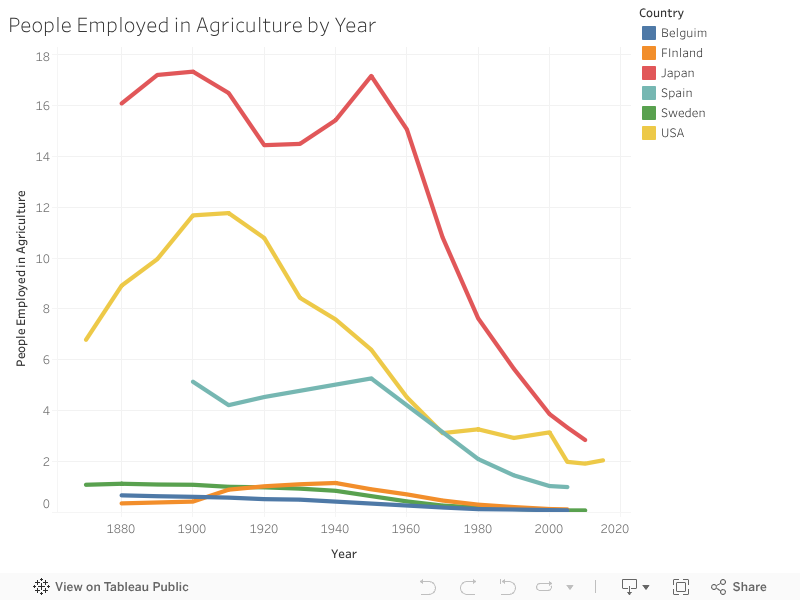
People employed in agriculture

While agriculture is the second greatest source of employment worldwide, the share of the population in this industry is declining. This indicator helps identify that as countries develop, agriculture employment declines. Most importantly, it can help us understand the pace in which people migrate from rural to urban areas.

Energy Generation & Storage

About Energy

Electricity is the blood coursing through the veins of modern society. One of the major security threats to nations today, particularly the U.S., is the vulnerability of the power grid, particularly given the aging and fragile infrastructure on which it rests. Any major, prolonged outage has the potential to bring down the communications infrastructure on which society and commerce depends.

The prospect of efficient, scalable, and affordable energy storage would be a game-changer.  The ability to disaggregate the storage of energy, which would also facilitate the disaggregation of production of energy would both reduce the vulnerability of society to the prospect of the power grid going down, and allow for scaleable micro-generation of power in the face of ever increasing energy demand.  Scaleable, efficient storage would also unleash the potential for the growth of renewable energy, enabling the balancing of supply and demand from erratic energy sources such as wind and solar.

More efficient energy storage also opens up new possibilities in mobile applications, from increasing the practicality of electric cars and other transportation systems, to facilitating mobile businesses.

Business Challenges

While breakthroughs in energy generation and storage will have obvious, but huge, disruptive impacts on the traditional energy businesses, and ripple effects on other sectors such as automotive, the promise of disruptive change in energy generation and storage provides opportunities for many other sectors that are otherwise constrained by the portability of power.

Trend Overview

Ever increasing environmental demands are being placed on energy generation, which is leading to diversification of energy sources towards building a low carbon economy. This is driving interest in battery technology and alternative energy sources, such as wind and solar, as well as increasing demands on improving traditional powers sources such as coal and nuclear.

Petroleum is the main source of energy in the United States. The liquid is predominantly utilized as a fuel in the transportation sector, which is also the second-largest consumer of energy in the US,  with a proportion of over 28 percent of the country’s total energy consumption. Investment in the transportation sector also increases given the growing consumption. South Korea, China, US and Germany are the four countries that have the highest level of energy storage method deployed.


Global Primary Energy Consumption by Source

The first KISS metric is global primary energy consumption by source. It is critical to understand energy consumption by source change with time so that we can understand the future of energy consumption.

Despite the prevalence of fossil fuels in the energy mix, the use of renewable energy sources has grown immensely in the last decade. Most of the renewable energy produced worldwide is derived from biomass, hydro and wind sources.


Global Primary Energy Consumption by Region

The second KISS metric is global primary energy consumption by region. As manufacturing centers are shifting toward Africa and South Asia, resulting in energy consumption growth in developing countries. It is interesting to see the relationship between energy-intensive manufacturing shifts and energy consumption worldwide.

Manufacturing centers are shifting toward Africa and South Asia, especially China and India, resulting in energy consumption growth.


Renewable Energy Investment

The third KISS metric is renewable energy investment. It emphasizes the opportunities for the energy system to attract the scale and types of investment that would align with a more secure and sustainable energy system.

Investment flows today determine where electricity comes from tomorrow. Increasingly, the money is flowing to renewable energy technologies. In 2019, the world financed $282 billion of renewable capacity, with onshore and offshore wind leading the way at $138 billion followed by solar at $131 billion. The success is attributable to maturing technologies and falling costs.


Energy use vs. GDP per Capita

The fourth KISS metric is energy use versus GDP per capita. Access to energy is a key pillar for human well being, economic development and poverty alleviation. Balancing the challenge between development and environment therefore provides us with an ultimate goal of ensuring everyone has access to enough sustainable energy to maintain a high standard of living.


The log model depicts the relationship between energy use and GDP per Capita. The positive relationship is clearly shown in developing countries.


Greenhouse Gas Emissions Due To Energy Consumption

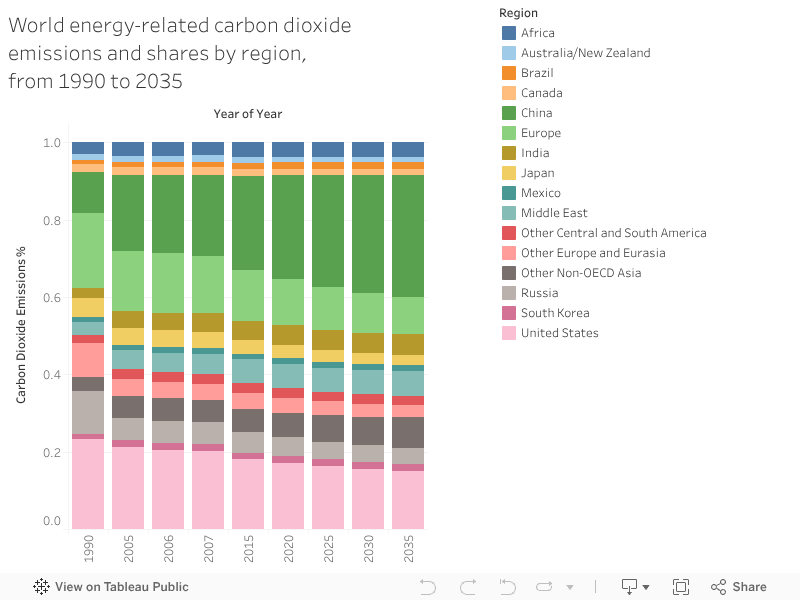
The fifth KISS metric is the greenhouse gas emissions due to energy consumption. Historical and current energy systems are dominated by fossil fuels which produce carbon dioxide and other greenhouse gases – the fundamental driver of global climate change. If we are to meet our global climate targets and avoid dangerous climate change, the world needs a significant and concerted transition in its energy sources. That’s why we picked green house gas emissions as an important indicator.

As people become more environmentally aware, the trade-off between GDP growth and carbon dioxide emissions occurs. Most energy-intensive manufacturing shifts to non-OECD Asia. The carbon dioxide emissions in non-OECD Asia continue to increase, which has driven concerns from the environmental prospective.


Electric Vehicle Sales

The last KISS metric is electric vehicle sales. As technological progress advances and the market for them grows, electric vehicles are expanding significantly. This goes along with the previous metric – greenhouse gas emissions. In 2019, indications of a continuing shift from direct subsidies to policy approaches that rely more on regulatory and other structural measures – including zero-emission vehicles mandates and fuel economy standards. The expansion of EV sharing systems also indicates that the transition in vechicle consumption will elevate in the future.


Deloitte estimated that EVs will represent 10% of the total automotive market share by 2024. The International Energy Agency (IEA) reports rapid growth in electric car deployment, particularly in China. The IEA forecasts thatEV stock would reach more than 250 million, reducing oil demand by an estimated 4.3 million barrels per day (mb/d).

Big Data

About Big Data

The statistics on how fast we are generating and accumulating data are staggering and only accelerating.  In 2010, Eric Schmidt, Executive Chairman of Google noted that “From the dawn of cizilization until 2003, humankind generated five exabytes of data (5 billion gigabytes).  Now we produce five exabytes every two days…and the pace is accelerating.” In fact it is accelerating so fast that by 2015, Forbes estimated that the amount of data we have will rise from 4.4 zettabytes in 2015 to 44 zetabytes, or 44 trillion gigabytes by 2020.  However, despite this astounding rise in the accumulation of data, what is more compelling is that less that 0.5% of all data is ever analyzed and used.

While most people and businesses have been aware of the rise of big data for quite some time, what will drive the profound impact of this megatrend is not only the increasing ability to analyze this data, but to do so in real time. As the tools to gather and analyze data in real time become more widespread, the business applications, in everything from marketing to supply chain, from finance to manufacturing, fast data will profoundly change the way business is done, and how competitive advantage is generated and sustained.

Business Challenges

The challenges for businesses around big data and fast data are numerous.  In most industries we will see a divergence between companies that are able to collect and analyze data effectively and those that can’t.  The effective use of data will become one of the fundamental generators – and destroyers – of competitive advantage. Ownership and access to data will become critical.  This could give advantages to industry incumbents who have access to data; otherwise these firms could be disrupted by new firms, or firms outside the industry who able to access and analyze data finding new sources of competitive advantage and undermining established patterns of behavior.

While the rise of big data and fast data will create myriad opportunities for companies that can take advantage of using data effectively, the big challenge that comes with this critical data is security.  Cyber security is going to be more and more critical as businesses rely more and more on the use of data as a source of competitive advantage.  We are already seeing the catastrophic impacts of large data breeches, but even these major events that are made public are only the tip of the iceberg.  The rise of ransomware hacks and other malicious attacks on a company’s critical data infrastructure is perhaps one of the most critical challenges facing many companies today and will only continue to become more important.

Trend Overview

Big Data is defined as “a field that treats ways to analyze, systematically extract information from, or otherwise deal with data sets that are too large or complex to be dealt with by traditional data-processing application software” in Wikipedia. It is one of most popular new technology in the Society.


Global Data Volume

The first indicator shows the growing volume in data creation and storage. It indicates the fast development in big data, and it also the foundation of the growth of following aspects.

The Volume of created data and that of big data storage in data center are increasing dramatically now. This trend is also predicted to continue growing in the future. The rapid growth of digitalization contributes to the big data times.


Hardware, Software, and Services

Big Data Market is divided in four fields: Hardware, Software, Services, and Cloud. The second, third, and fourth indicators show the impact of big data in those four aspects. The third indicator lists the specific effect of several companies and industries in revenue and workforce.

In Big data market, the revenue of all the Hardware, software, and service segments are increasing. Software occupy almost half of the total revenue in Big Data Market. For individual vendors, the revenue and employment amount change differently.


Impact on Companies and Industries

There is an obvious enhancement in software revenue, and a comparatively small increase in hardware revenue in Oracle in big data market. After relating big data revenue with the whole revenue and wordforce,  there might be a positive relationship between big data revenue and the number of employees in the company. However, the development of big data in Oracle do not have much influence on the whole revenue. The reason might be that other business focus has greater impact than big data hardware and software on Oracle total revenue.

The revenue of hardware increase and that of service decrease in DELL in Big Data Market from 2015 to 2017.  Dell Hardware revenue has similiar trend with the workforce and net revenue. This situation might remind the company to pay more attention to the big data Hardware business.

The service and software are two essential fragments consisting IBM Big Data Market. Nevertheless, there is not an obvious relationship between big data revenue and net revenue, neither the workforce. Maybe there is a correlation between IBM big data hardware revenue and total revenue of the company. Or, IBM should reconsider their business focus.

The revenue of big data market changed in opposite direction with the net revenue and workforce in HPE. With the more and more outstanding companies in the big data market, considering the core task of the whole company might be a serious problems.

Comparing the two graphs, Big Data Market revenue contribute a lot to the net revenue in AWS. This might be a great opportunity for AWS to improve its big data collecting and analyzing technology to follow the trend in the world. Besides, AWS could consider the method to balance the development in big data market and other new technology markets. It is easy to combine the graph below with information in “Technology Innovation” module.

Distinct industries are impacted by disparate levels. The statistic shows the leading industries based on their share of the global big data and analytics market in 2019. In that year, banking and manufacturing take a great percentage share of the revenue.


Cloud

Typically, the cloud service market is divided into three primary service models, encompassing infrastructure (IaaS), platforms (PaaS), and software (SaaS).  “Software as a Service” allows comsumers to easily processing the big data;  “Platforms as a Service” harness the big data and allowed it to be utilized in a variaty of ways; “Infrastructure as a Service” allows for a real-time processing of big data. In turn, big data promote cloud industry creating much more cloud-based applications. Then, fueling economic growth in cloud market.

Every vendor focused on different Cloud segments. This also explain the revenue alternation in hardware, software, and service for vendors. 

The share of installed cloud workloads shows that SaaS is the most popular segment in the cloud market. This might allow companies to consider their working focus in the cloud market.

Surveys in 2019 and 2020 indicated that governance, managing cloud spend, and security might be the greatest challenges. This remind developer of Cloud and Big data to notice the new target.


Online Advertising

The fifth indicator- online advertising- is a popular and useful application of big data. The improvement in big data help the online Advertising a lot.

Online advertising revenue in the United States grew by 15.9 percent in 2019 compared to 2018, and the revenue is expected to increase to 248.1 million dollars in 2023, owing to the emergence of data analytics application in new channels and formats. The statistic shows the success rate of various big data initiatives as of 2019, according to a survey of industry-leading firms, primarily in the United States. As of that time, 59.5 percent of respondents reported having seen measurable results from big data initiatives to decrease expenses.


Occupation Shift

The last indicator is the occupation shift. The technology boom of the last 20 years has generated more information than organizations know what to do with, and they need people to analyze the data and put it to use to make solid business decisions. Data analytics skill has become one of the most in-demand jobs worldwide, and it offers exciting career possibilities for college graduates to explore.

Data Analytics and Data Science Skills are one of the most in-demand skills in 2019 according to a survey by Greenbook. 96% of companies are planning or likely to plan to hire new permanent staff with relevant skills to fill future big data analytics related roles.

Blockchain

About Blockchain

The most well-known Blockchain application currently is the virtual currency Bitcoin. While the terminologies and concepts behind how Bitcoins are created, or “mined,” the anonymous nature of the creator(s) of the platform, the volatility of the exchange rate between Bitcoins and established national currencies, make many people distrustful and suspicious of the value of the Bitcoin currency.  However, the underlying technology on which Bitcoin is built, the Blockchain, has vast potential to disrupt the way transactions happen and how we verify information, and accordingly, how we trust that what individuals and organizations claim is true is verified as being true.

The concept of the Blockchain is a peer-to-peer decentralized database that stores an encrypted registry of assets and transactions, creating the potential for an ultra-secure, highly versatile way of verifying ownership, transactions and other information that requires independent verification.  The possible applications of Blockchain are numerous and may fundamentally alter how a large portion of business transactions occur. This would, for example, enable consumers to verify supply chains of components used in the production of the goods they purchase, in turn enabling companies to verifiably demonstrate ethical supply chains and business practices to their customers.  It would enable food producers to show fair-trade or organic ingredients and enable consumers to know the origin of their food.  Beyond supply chain applications, it can enable distributed cloud storage, decentralized exchanges that facilitate transactions without an intermediary institution, the managing of digital identity, which reduces the possibility of fraud and identity theft as well as enabling applications such as digital voting, smart contracts that self-execute under predetermined conditions, and many other applications. In short, the development of the Blockchain will revolutionize transactions, enabling even the smallest transactions – like the purchasing of a song on a digital music service, to be easily recorded and verified.

Business Challenges

While the Blockchain may give greater security for transactions – reducing one of the biggest threats to business today – the flip side to the verifiability of every transaction and data about transaction is that, consumers will demand greater transparency from companies as to their supply chains and hold them to higher standards of ethical practices within supply chains that they may not directly control. 

As the transition to Blockchain occurs, there is the real possibility that consumers will adopt this technology for transactions faster than many incumbent businesses will.  If this is the case then transactions may shift away from such businesses at a rapid pace, causing shifts in the market dynamics of many industries.

Trend Overview

Blockchain has been utilized in many different forms. It has been used as the foundation of clearing and settlement systems that are resistant to tampering and fraud. The technology is used for smart contracts, and found use in speeding up digital transactions as well. The wide array of apps and the rapid diversification of blockchain also heralds an opportunity for developers. With more firms gearing up to take advantage of blockchain, the demand for developers will start growing exponentially.


Area of Focus on Specific Blockchain Use Cases


Many people know blockchain because of its capabilities and potential when it comes to payments and transactions, however companies and users also focus on certain areas of blockchain involvements such as digital currency, data sharing, certification, and asset transfers. The changes within these particular sectors are also important to note as they can impact the direction of which blockchain may shift.

From this graphs you can see that from 2019 the focus on timestamping and tokenized securities hasn’t really been affected, but in the span of one year focus on data access/sharing and identity protection have both decreased by around 20% and keep in mind that this only happened in the span of one year so if this trend does continue this may lead to some unexpected consequences. However on the bright side, there seems to be an increasing shift in access to IP and certification, this means that companies and users are trying to shift to a more transparent method of transactions and further improving upon the security of blockchain. 


Distribution of Leading Cryptocurrencies


This graph presents the distribution of these cryptocurrencies from 2015 to 2020, by market share. The market capitalization of Bitcoin constituted 66% of the total market cap of all cryptocurrencies in 2020. This figure decreased from 86 percent in 2015, in large part due to the rise of other cryptocurrencies.


Worldwide Spending on Blockchain


This graph presents the total worldwide spending on Blockchain. The data forecasts a steep increase in worldwide spending through 2023 and beyond. It also indicates that an exponentially increasing upward trend remains consistent in the years to come.


Blockchain Investments by Global Organizations


This graph depict’s organizations projected investments into Blockchain over the course of 2020. This shows the perceived importance of blockchain and can be used to predict future trends in investments.

Social Commerce

About Social Commerce

While we have already seen the impact of Uber, Airbnb, UpWork, and others, we are only at the tip of the iceberg in terms of the potential for peer to peer platforms to disrupt industries, particularly in the consumer-facing space.  The rise of the internet, social media, smart-phones and app stores have created the ability for consumers to procure the goods and services they need and want from other consumers rather than from established companies.  But the real behavioral shift that has occurred is a complete change in the basis of trust which facilitates these transactions.  In previous generations, trust was institutionalized – we trusted institutions, both because of the consistency of institutions and the ability for recourse should things not turn out as promised.  Now however, we are trusting individuals that we have no direct past history with.  While we grew up with the notion of not getting into cars with strangers, if we request that car through an app, and it shows up with a “U” sticker on it, we happily get in. We previously relied on reviews from trusted sources before making major purchases.  Now we rely on the views of strangers.  At the same time as the rise in our trust of other individuals through electronic ratings, our trust in institutions has declined. A glance at the Gallup polls across various types of institutions over recent decades shows a dramatic fall in the public’s trust in institutions such as Congress and the Presidency, banks, big business, newspapers, television news, public schools, and the church.  This dramatic fall in the public trust in institutions that were the pillars of society, and the shift to trust in individuals through peer to peer exchanges represents a remarkable shift which has huge implications in most consumer-facing industries.

Business Challenges

The rise of peer to peer platforms, and the shift in trust that has developed along side it has prompted a range of differing responses from incumbent companies in those industries.  Some have tried to resist through direct action, such as striking taxi drivers in cities such as London and Paris in response to the disruption of Uber.  Some have sought to influence changes in laws to protect their turf, such as hotel industry lobbying to restrict the scope of airbnb.  Still others have sought to embrace the sharing economy notions of peer-to-peer platforms by introducing or acquiring sharing platforms and infrastructure, such as BMW’s ReachNow car-sharing initiative, or car-rental company Avis’s acquisition of Zipcar.  With the force and momentum of megatrends, while some companies may be effective at prolonging their decline through various resistance tactics, generally the exploration and embracing of business strategies that align with the direction of the megatrend are more likely to be successful over the long term.  But how, to what extent, and at what speed you make this transition are key factors in future success.

Trend Overview

The number of people online, on mobile and on social has increased year-on-year. For companies who are optimizing their digital experiences across multiple channels, such as social media and e-commerce, are establishing a strong competitive advantage. Moreover, companies looking to move into social commerce should look at ways to build trust and create an online experience that demonstrates a clear value in browsing and buying online.


Revenue Growth of Peer to Peer Platforms

Kiva, Uber and Etsy have shown significant growth in revenue in recent years, while the market size of the peer to peer lending space is set to boom over the next several years.


Growth of the Sharing Economy


The growth volume of the sharing economy is projected to exceed 450 billion dollars by 2023. Similarly, the number of sharing economy users shown steady increases in recent years.


Platform Usage by Gender

Numerous social media platforms have become quite popular in the United States, but Facebook and Youtube have the most monthly active users. While some platforms are popular among both men and women, others appeal more to one gender.


Rates of Adoption by Technology


Technology such as mobile phones, the internet and social media have been widely adopted at rates comparable or faster than other technology main-stays.


Fixed Broadband Subscriptions

From 2000 to 2018 households around the world have gained access to highs-speed, personal internet access and thus, can engage in social commerce related activities.


Rise of Online Datin


The rise of online dating indicates increases in the comfort with and practice of engaging with others through online platforms.

About Our Team

Andrew Ward
Andrew Ward
Lehigh University - Professor, Management Department
Joshua Ehrig
Joshua Ehrig
Lehigh University - Professor of Practice, Management Department
Jia Wo
Jia Wo
Lehigh University - 20' Industrial & Systems Engineering
Michael Port
Michael Port
Lehigh University - 22' Computer Science & Business
Tara Fitzpatrick
Tara Fitzpatrick
Lehigh University - 21' Environmental Studies / HMS
Matthew Piriya
Matthew Piriya
23' Computer Science & Business
Linh Thai
Linh Thai
Lehigh University - 23' Business
Danielle Testa
Danielle Testa
Lehigh University - 21' Psychology (Cognitive Neuroscience)
Daniel Simboli
Daniel Simboli
Lehigh University - 24' CSB / Industrial & Systems Engineering
Diana Liu
Diana Liu
Lehigh University - 22' Mathematics / Economics
Fernando Tamayo
Fernando Tamayo
Lehigh University - 21' MBA Business Analytics
Karina Chen
Karina Chen
Lehigh University - 24' Computer Science / Design