“The world is urbanizing at an unprecedented rate, and more than half the world’s population live in cities” (World Bank 2018). This Societal Shift explores the pace by which large numbers of people concentrate in relatively small areas. It is expected that by 2050, two-thirds of the world will live in urban areas (UN 2015). Indeed, rapid urbanization is happening and thus, it is imperative to learn where is this growth occurring and what key indicators help us foresee the cities of the future.
Trend
More than half of the world’s population lives in urban areas. Due to the ongoing urbanisation and growth of the world’s population, there will be about 2.5 billion more people added to the urban population by 2050, mainly in Africa and Asia. The world’s urban areas are highly varied, but many cities and towns are facing problems such as a lack of jobs, homelessness and expanding squatter settlements, inadequate services and infrastructure, poor health and educational services and high levels of pollution.
Table of Contents
The largest 20 cities in 2035
Ongoing rapid urbanization has the potential to improve people’s wellbeing and it is important to learn that Asia will lead in number of megacities by 2035:
Percentage of population living in urban areas
Rapid urbanization is not only happening in Asia. It is taking place everywhere in the world at a similar pace! For example, by 2050, urbanization will reach 90% in South America. The following chart allows for comparison among the world’s continents:

Population density in the US
Population density is a measurement of population per unit area and it is a key geographical term. While the US does not rank within the top 50 countries for this indicator, it is important to note that cities such as New Jersey and Rhode Island have 1,208 and 1,025 inhabitants per square mile, respectively. The next graph shows the rate of growth for population density in the United States:

Population of Beijing, China
Beijing is the 11th largest city in the world and its population will reach over 25 million people by 2035:

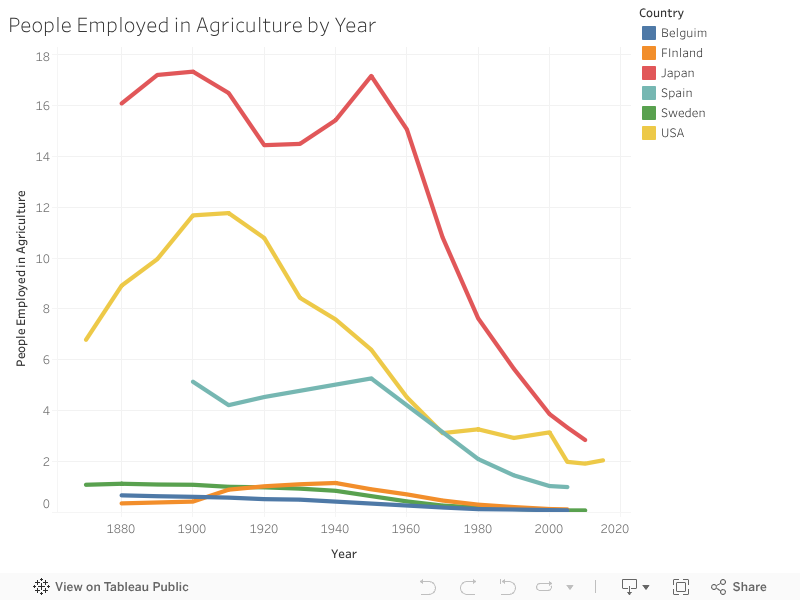
People employed in agriculture
While agriculture is the second greatest source of employment worldwide, the share of the population in this industry is declining. This indicator helps identify that as countries develop, agriculture employment declines. Most importantly, it can help us understand the pace in which people migrate from rural to urban areas.






One thought on “Rapid Urbanization V1”
Comments are closed.